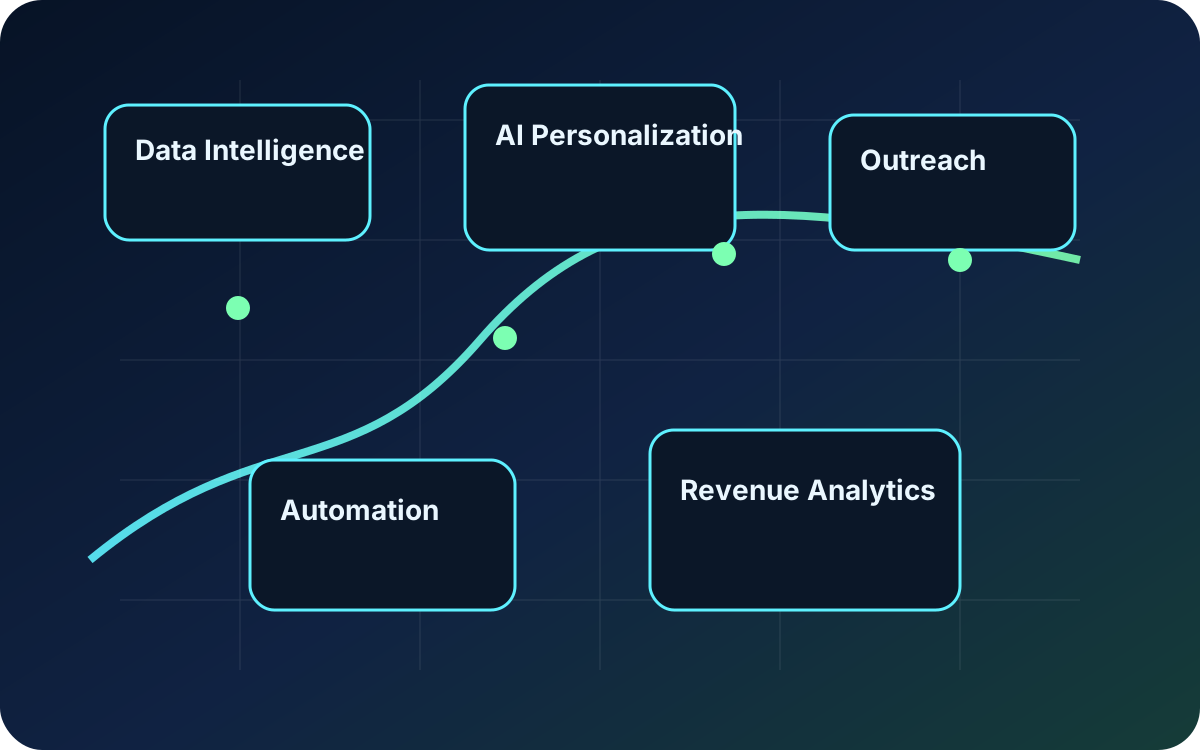
What Makes Growth a System?
A growth system is the operating layer that connects who you target, how you engage them, how your infrastructure supports outreach, how your website converts demand, and how your team learns from performance data.
For many businesses, growth still depends on separate tools and isolated campaigns. Data sits in one place, outreach in another, SEO in another, reporting somewhere else. AI becomes useful when it helps connect those moving parts with better research, better prioritization, and faster execution.
The Six Infrastructure Layers
Modern businesses should think in layers: intelligence, channel execution, infrastructure, automation, digital experience, and analytics. Each layer supports the next.
- Data intelligence: define who to target and why.
- AI outreach: personalize engagement without relying on generic templates.
- Email infrastructure: protect deliverability and sender reputation.
- Search visibility: turn high-intent demand into inbound traffic.
- Automation: reduce manual routing, reporting, and research work.
- Digital experience: convert attention into leads, meetings, and revenue opportunities.
Where AI Creates Leverage
AI should improve the quality and speed of growth work. It can help identify account signals, summarize prospect context, generate first-draft messaging, map SEO topics, create image prompts, suggest internal links, and route workflows. It should not replace strategy, positioning, or quality control.
The strongest use cases combine automation with human judgment: AI handles repetitive analysis and first drafts, while teams review positioning, claims, and customer relevance.
Internal Resources
FAQ
What is an AI growth system?
It is a connected system for targeting, outreach, visibility, automation, conversion, and reporting that uses AI to improve research, personalization, prioritization, and execution.
Can AI-generated blogs support lead generation?
Yes, when topics are researched for search intent, written for human usefulness, internally linked to relevant services, and supported with clear CTAs.
How should businesses avoid low-quality AI content?
Use human review, cite only supportable claims, avoid keyword stuffing, add original perspective, and align every article with real audience needs.